Information for private students here:
Rosin: A to Z
No accessory is more important than violin rosin. Rosin creates friction between the bow’s horsehair and the strings of an instrument, causing the strings to vibrate more clearly. In essence, it allows the bow to “grip” the strings. Without rosin, you won’t hear much sound at all.
There are different types of rosin, and each will produce different sound qualities. For example, using a lighter rosin might work well for a violin or viola, but will be too light for a cello or bass. Thus, understanding how rosin is made will help you choose the right rosin for your particular instrument and climate.
From Resin to Rosin
Rosin is a solid form of resin, which is a sticky, sap-like substance that comes from trees such as pine, fir, and cedar, or other conifers such as spruce and larch, sometimes a mixture of multiple saps. Resin is collected through a process known as tapping, which is when sap exits the tree through a hole placed in the outer bark. Once collected, the resin is heated and purified until it can become solid when cooled. Sometimes additional ingredients such as beeswax, turpentine, or gold flakes are added, which enhance the gripping ability of the bow and thereby the sound quality of the instrument.
Types of Rosin
There are three basic types of tree rosin – light, amber, and dark. But because specific instruments require different types of rosin, not all rosin is created equally. For example, light-hued rosin is less dense and sticky and is most often used by violinists and violists. Medium and dark-hued rosins, which are softer and tackier to the touch, work better for cellists and bass players. Lighter and darker rosin can also be chosen because of general climate conditions. A dry climate might require dark rosin, and a more humid environment could require lighter rosin. Furthermore, each manufacturer has its own process and recipe — and they closely guard their recipe as an important piece of corporate intellectual property.
Rosin – shelf life
Rosin does get old and loses its effectiveness as the chemical properties change with exposure to air and light. Violin/viola rosin typically lasts between six months and two years, depending on usage and quality, with most players recommending replacing it roughly every six to eight months as it can dry out and become less effective over time; signs of old rosin include a dry, powdery surface and a lack of grip on the bow hair.
Practical advice:
Quality matters: Higher quality rosin generally lasts longer than cheaper options.
Playing frequency: Frequent playing will deplete rosin on the bow faster.
Storage: Store rosin in a cool, dry place to prevent drying out.
Check for signs of wear: If your bow slips excessively or the sound quality is noticeably diminished, it might be time to replace your rosin.
Whatever you do, always give 100%
(unless, of course, you are donating blood!)
|
|
P r a c t i c e A d v i c e:
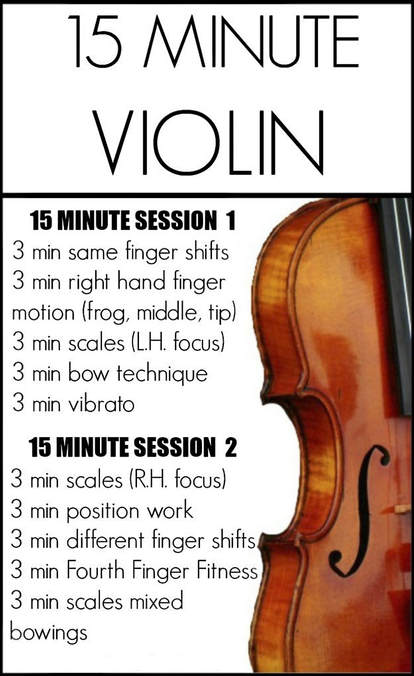
1) Write out a schedule: A schedule can help you organize your time. Be sure to allow time to review technical work (scales, arpeggios, tone & bowing exercises): the foundation of all the complicated things that come later. 2) Set goals: A schedule with goals can help you organize your thinking and chart your progress. If a certain task turns out to be really difficult and occupies too much time, break things up into smaller pieces – your goal should be to achieve results, not to cover material. 3) Concentrate: 10 minutes of focused practice is worth more than an hour of playing without results. Plan/work/see results and then walk away! You are building the skill of efficient practicing. 4) Relax and practice slowly: Take your time - donʼt rush through things. Start slowly and build up speed. Playing a small piece of music perfectly, even if it is slow is more valuable than playing through any music badly. 5) Practice hard things longer: Spend more time practicing what you canʼt do. Donʼt be discouraged, just look for ways to make progress: some things take longer than others - youʼll get it! 6) Practice with expression: Work the musical details into your playing, even when practicing slowly or in breaking things down into small pieces. 7) Learn from your mistakes: Don’t be too hard on yourself. If something goes wrong, analyze what went wrong and keep moving forward! 8) Be optimistic: Optimism helps you get over your mistakes and go on to do better. Develop your endurance while keeping a positive attitude. 9) View practice as discipline: Develop the discipline it takes to become good at something. That discipline is the real foundation of talent! The more you discover the relationships between things that at first seem different, the larger your view of your music becomes. In other words, your practice sessions can open up a whole world of possibilities. |